
Leadership Can't Be Hypothesised
I was brought in by a training business to partner with a director on the client side: someone genuinely good at her job, well respected, and hands-on enough that she was designing eLearning content herself rather than just signing it off. What she didn't have was much experience with dynamic content, video in particular, which is where I came in.
The business was a UK facilities management company: 70,000 staff, 4,500 managers, the kind of scale where "leadership programme" usually means something built once and rolled out identically to everyone, whether it fits or not.
We opened with something like "What makes a great leader here...", a decent, sensible start. And then, over the following weeks, the content drifted. Not badly. It became more theoretical, more hypothesised: the kind of leadership content that sounds correct because it's built from principles rather than from anyone's actual Tuesday afternoon.
The Numbers Looked Fine. That Wasn’t the Problem.
It was still working, by the metrics that get reported upward. People were completing it. The stats looked reasonable. Nobody was raising the alarm.
But there wasn't much bite to it. It didn't feel like anything had actually changed hands between the person on screen and the manager watching on their phone in a break room. It was competent, and forgettable, and I think both of us knew it before either of us said so out loud.
What We Changed, About a Quarter In
The shift happened roughly a quarter of the way through the project, and it was simple to describe even though it wasn't simple to do: we stopped hypothesising about leadership and started filming it.
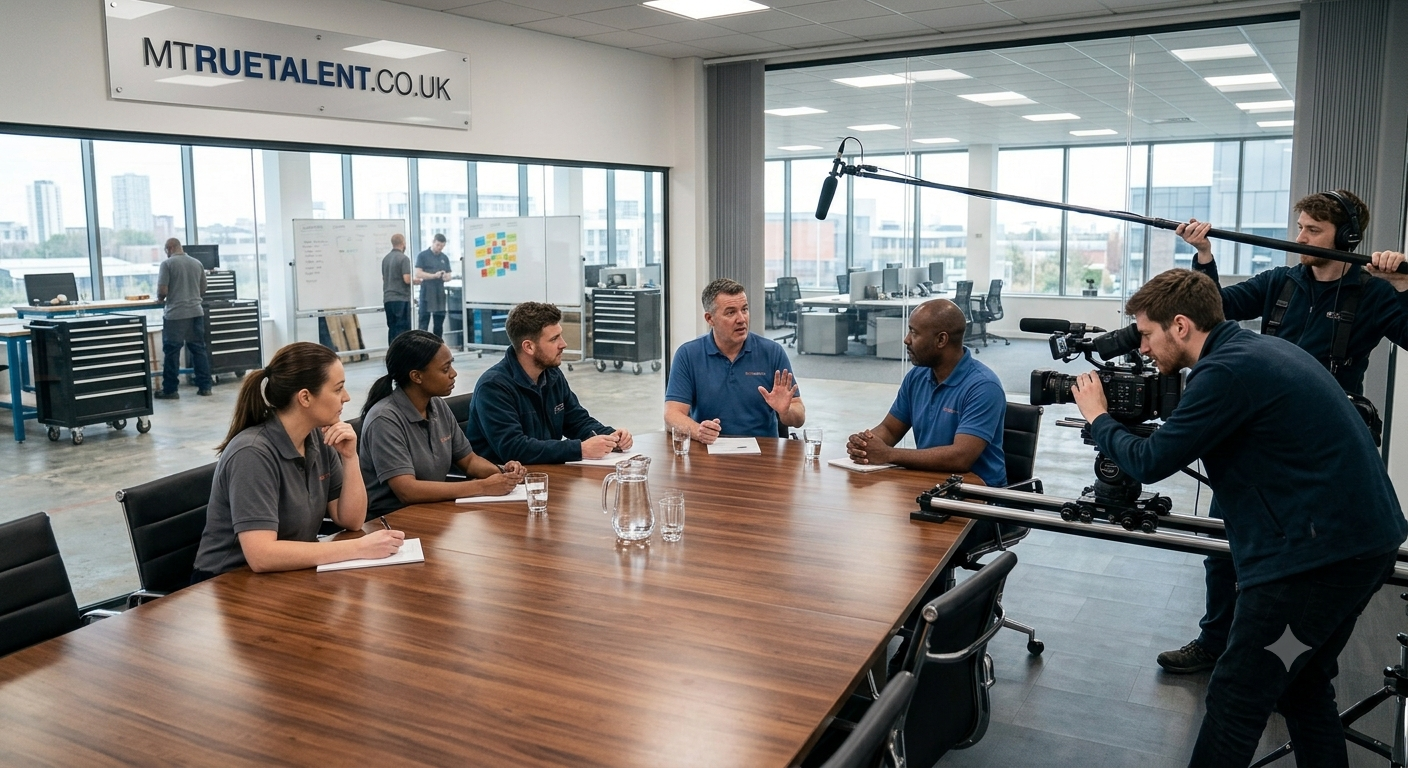
Instead of a presenter talking about difficult conversations in the abstract, we filmed actual managers from the business having them, or as close to having them as a workshop can get. How to treat a team member who's struggling. What a real performance conversation looks like when it isn't going well. What good actually sounds like, from people who'd had to find out the hard way, on the job, with their own name attached to the outcome.
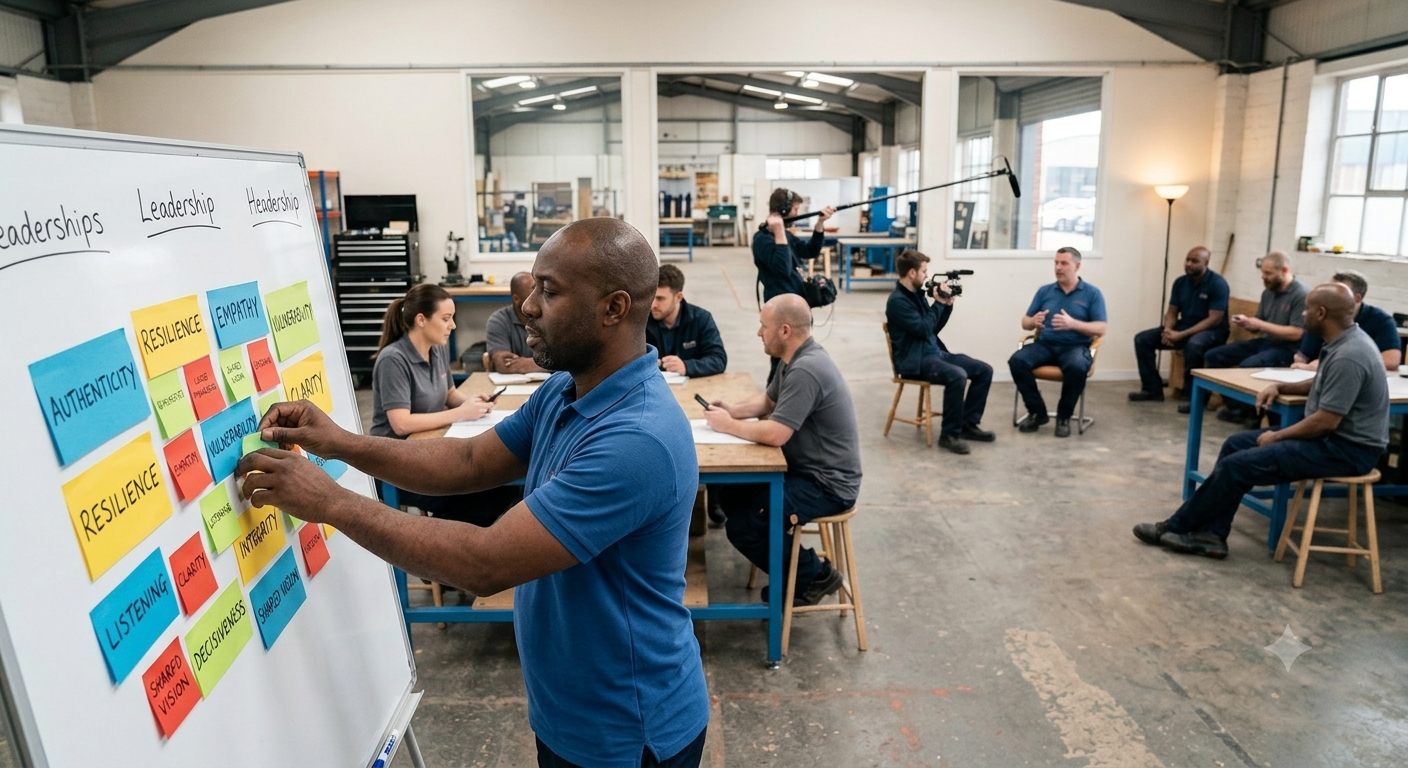
Some of it was structured interview. Some of it was closer to fly-on-the-wall: managers working through real workshop material on camera, unscripted enough that you could see them think. Neither version was polished in the way corporate video usually is, and that turned out to be exactly the point. Nobody believes a leadership video that looks too finished. People believe the pause before someone answers a hard question honestly.
The final programme, called Leading Together internally, ended up as a mix: video content carrying the emotional weight, interactive learning widgets to apply it, and downloadable homework so people could actually plan what they'd do differently with their own team. But if you'd asked me which part of it did the real work, it wasn't the interactivity or the homework. It was the learned experience content: real people, saying real things, about a job they actually did.
What It Was Worth
The programme went on to report a 71% completion rate across its targeted rollout, and a 63% rise in overall colleague engagement: big numbers for something aimed at 4,500 managers, not a small pilot group. Engagement scores tied specifically to management behaviour rose too, and senior leadership engagement climbed even further. It fed a healthier pipeline internally as well: a 25% promotion rate among people who'd been through it, and a marked jump in people going on to management apprenticeships.
None of that surprises me now, looking back. What surprises me is how close we came to shipping the version that would have hit its completion targets and taught almost nobody anything. The stats would have looked identical for a while. The only thing missing would have been whether anyone actually changed how they led.
I think that's the real lesson, and it applies well beyond this one programme: at scale, it's entirely possible to build leadership content that performs well and teaches nothing, because completion and comprehension aren't the same metric, and only one of them is easy to measure. The fix wasn't a bigger budget or a better script. It was handing the microphone to the people who actually knew what they were talking about, and leaving the camera rolling while they worked out how to say it.
What do you think? Have you ever experienced something in the workplace which appeared to work in the first instance but then needed a change of direction and a different kind of thinking to put it on the right course?